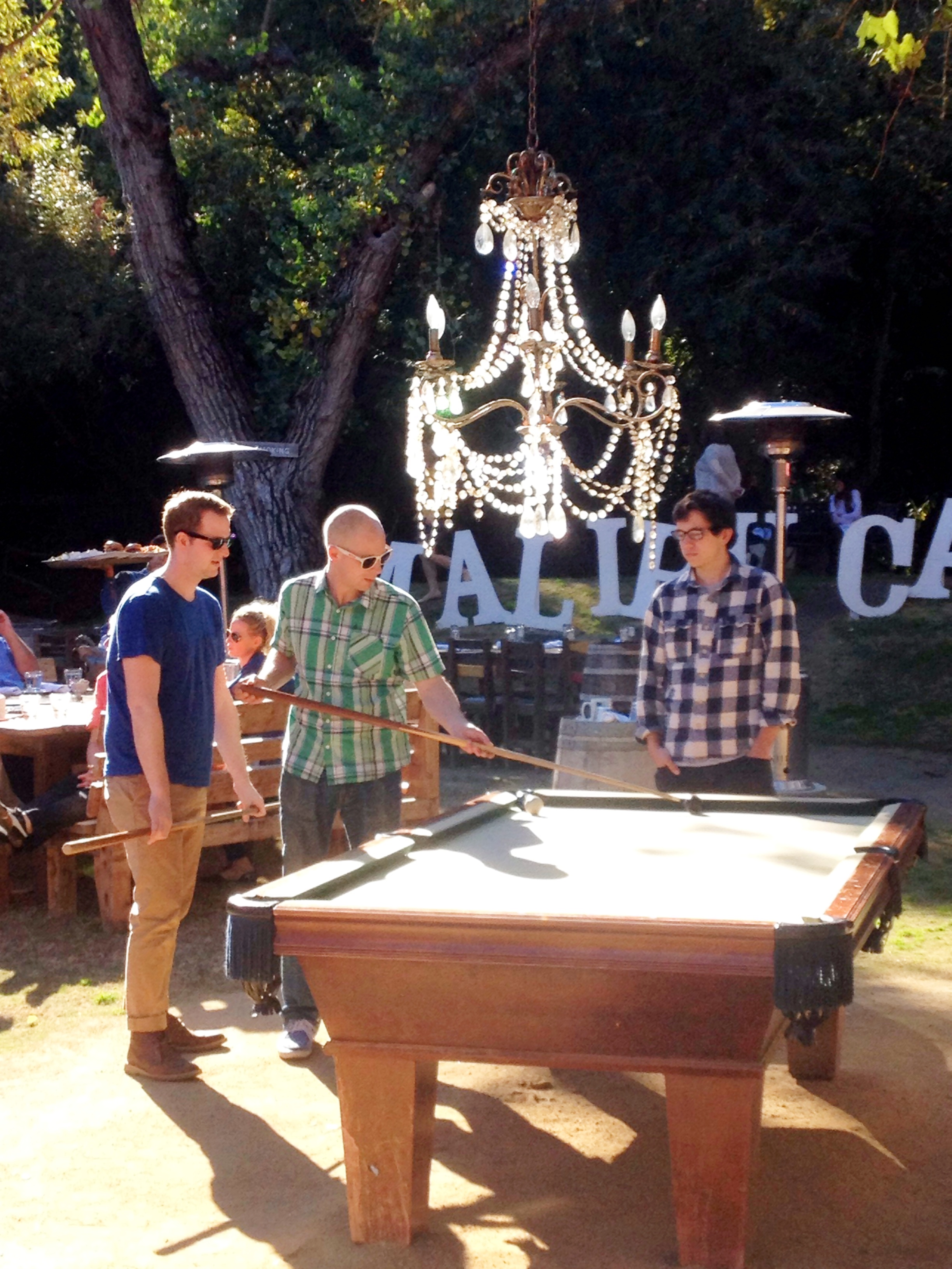
We hope you all had a wonderful Thanksgiving! We had a weekend full of family time complete with a lovely Thanksgiving dinner, a wonderful day in Malibu, a set by Monster Rally and an endless shopping trip to make you never want to set foot in a mall again! Here’s a little glance back.
We’ve been doing a weekly One Word, Two Ways series since the start of Sister Disco. We keep a compilation of the series as one of the site’s header pages but thought it might be fun to share it with you as a post today. Click though any of the words below, if you’re so inclined, to check out the post related to that word!
In addition to all the guidance and wisdom Farrell and I have received from the “moms” in our lives, they have each been gracious enough to put some of their life lessons into writing (or we’ve done it without their knowledge – i.e. our grandmother) and share it with all of us here. We hope you’ll take a glance back at these tips for living, these ladies know what’s up.
– Our grandmother is 96 years old. She is the queen of getting herself out of tough conversations and giving responses that say everything and nothing at all. These are her best responses…(read more)
– Suzanne has been one of our mother’s best friends since graduate school and is basically our third parent. She moved into our home the day Lauren (the oldest of the four of us) was born and lived with us for thirteen years. She was there for every birthday, knee scratch and first day of school. Just like any other parent, she helped mold me into the person I am today. What can I say, she is the best. When we were growing up, every time we said goodbye to Suz, she would tell us, “Trust in yourself. Do what’s right.” I asked Suz about her biggest life lessons; this is what she had to say…(read more)
– Our mother shares that her biggest challenge is to…(read more)
Our brother, David, is one of the many awesome people in our lives who has contributed to Sister Disco. David’s post on the importance of (non-virtual) social networks holds so much wisdom about the science behind the ways in which we all influence each other. The messages seem particularly worthy this time of year.
David, recently picked up a copy of the book Connectedat his local bookstore, The Booksmith, in San Francisco. It made quite an impression on him and he has captivated us with his thoughts on it. He lovingly agreed to do a two part post on the book and we’re so excited to share part one with you today. It is sure to enhance your perspective on your own life and humanity at large.
CONNECTIONS
A review and reaction to Connected, by David Feighan.
Connectedamazingly describes human social networks in a way that shifts your perspective to view a group as its own organism, instead of just a collection of individuals. Seen from this perspective, the significance of connections in everything is blindingly glaring.
First, let’s look at the premise of the book. To conceive of a social network, consider an ant colony or a flock of birds. The colony or the flock seems to have a life of its own beyond the individuals. For people, this is called “The Human Super Organism.”
The connections come to define the experience of individuals in the group and the group itself (similarly carbon atoms can be coal or diamonds, depending on connections). So how our social networks are formed have dramatically different effects for those involved, just as people have different cultures but nearly identical emotions. Since you don’t necessarily know your friend’s friends, no one can see his/her social network or his/her network placement. Networks are comprised of several degrees of separation, barring any member from seeing the network in its entirety.
We are all separated by 6 degrees. But social influence extends 3 degrees. This means that we cannot know the point from which we are being influenced. Free will is not as static as we think, and we are influenced more by external factors than we realize. We can choose to start a fight, but it is much less of a choice to be sucked into one.
For something invisible, social networks are important. They can affect up to 70% of a person’s behavior. Position in a social network can predict happiness better than race, class, gender, education and income. Positional inequality can be stark, but people can and do adapt to new positional roles rather effortlessly. Also, wealth and status are relative, so social networks reject dramatic income inequality.
Additionally, the group sets morality. Likewise, in a social network, if enough people believe a lie, it must be regarded as true; otherwise it threatens the fabric of the social network (think “The Emperor Has No Clothes”). Social networks are not inherently good or evil, and connections can harm you, but they are more likely to be beneficial and to conduct and retain positive energy.
Connections are self-perpetuating. Central people are more likely to be happy; people treat them more altruistically. People on the edges are lonelier and are more likely to think that society doesn’t work. Plus, social networks can fray at the edges. As one person disconnects from the group, they created a new set of people on the edge, who are now more likely to disconnect as well. By tending to those on the edge a person can prevent network decay and improve his/her own life.
*People only have the mental capacity for up to 200 connections. The low number is because we have to track the interconnectivity of all 200 people.
Putting positive energy into our networks is actually in our own best interest because it is multiplied and contagious, boomeranging back. In fact, many people designate a spot for God when asked to draw their social networks, essentially connecting everyone to everyone with love. Social networks simply create a feeling of oneness. Consequently, friendship and loyalty can trump self-interest. Altruism, love, reciprocity, trust, sympathy, compassion and generosity spread throughout a social network and are essential to it. Being nice is actually the most efficient way to be happy.
Our connections are among the most valuable things we have as human beings. Connected says, “When we have lost our connections, we have lost everything.” Certainly, the idea that exile was once considered worse than execution is one example of this; so is solitary confinement.
We are only measurable relative to our connections. So, by breaking into the impenetrably dense (trillions of connections) structures of social networks, perhaps social networks can address some paradoxes in our lives. People are increasingly screaming at the world about seemingly no-brainer threats to society, like climate change. Obviously, we are ruining our world. Yet, our social networks are dependent on an economy that exploits our natural resources. Individuals can see this and act on it, but social networks cannot. Giving way to the power of networks, this leads people to identify with what Foucault called “regimes of truth,” which allow for cognitive dissonance (subjective and unconscious denial of facts).
So if the existence of social networks confirms the absense of objective truth, than the only real reality is the life-blood of social networks – love.
This isn’t just a reference to romantic love, but what is necessary to social networks: altruism, reciprocity, trust, sympathy, compassion and generosity. Going further, people are unconsciously connected, such as sensing when someone is looking at the back of your head, or sensing when a loved one is about to call your phone. Studies have shown that this feeling is based on emotional proximity, not physical proximity. Couples describe this all the time –their connection was so significant, it trivialized everything else.
*
So, how can we blow smoke across the lasers that are our interpersonal relationships? Tune in for part 2 to find out.
*Connected was written by Nicholas Christakis and James Fowler, of Harvard and UCSD, respectively. It details and explains the nature of human social networks studied as a whole. It was published in 2009, and since, the term “social network” has come to define websites more than our flesh and blood social lives. Please remember that “social network” refers to groups of people both in real life and the digital world.
I’m getting ready to head out to the west coast to meet up with the rest of our family for the week. While we’re enjoying each other’s company in the California sun, we’ve scheduled a series of posts that take a look back through our archives. First up, we have a little recipe rewind for you that we hope might come in handy as you finalize your Thanksgiving menus. Enjoy!
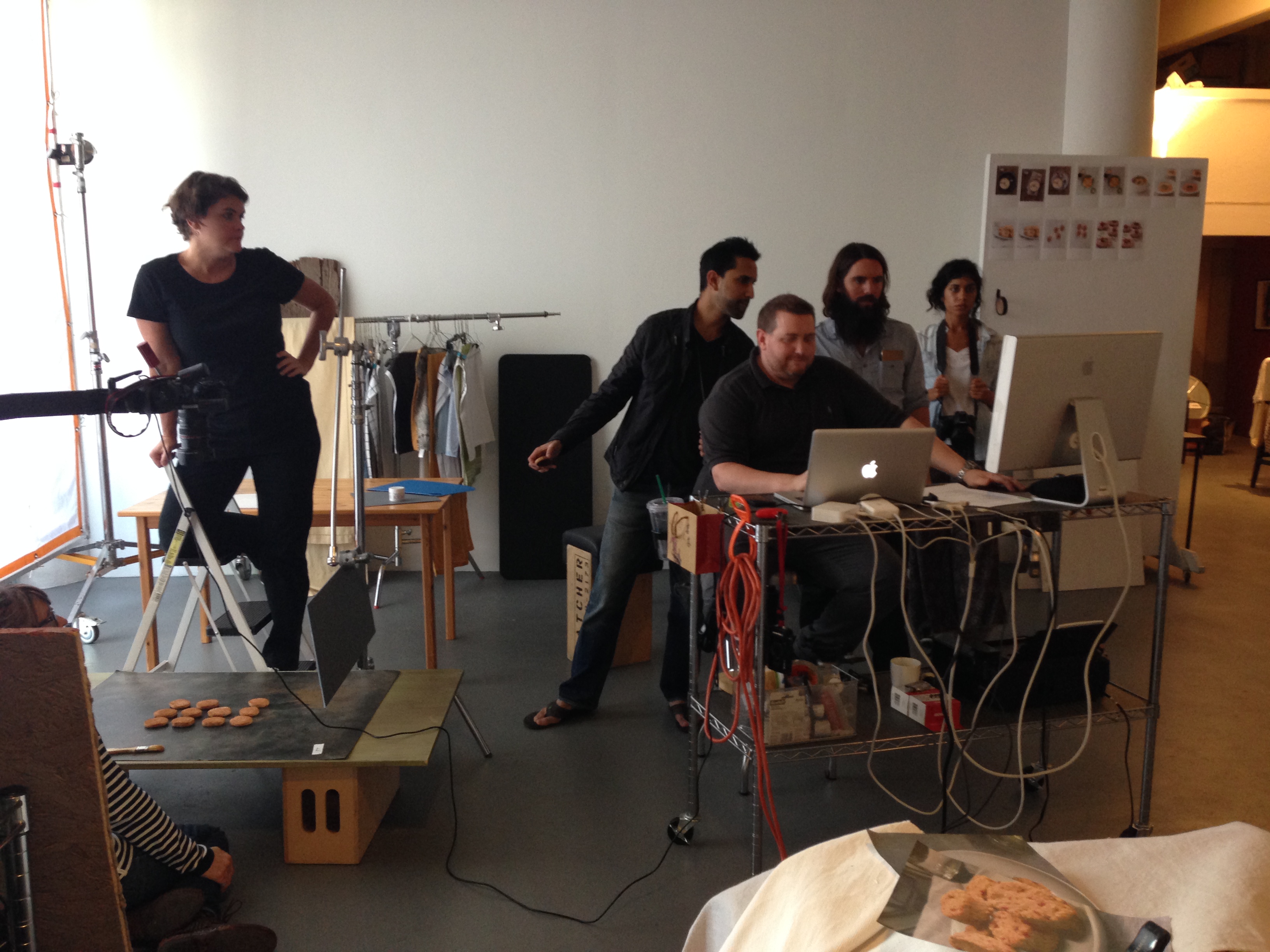
This week we have been working on our team’s new recipe book. It has been a fun, challenging and fascinating experience. If anything, I feel lucky to share a vision with amazing people and have fun doing it.
More importantly, I have been reminded that I love cooking and I am going to START doing it again. Every time I step into a kitchen recently, I shut down. This shoot has inspired me to get back to doing something I once loved.
I will keep you posted on what new things I create.
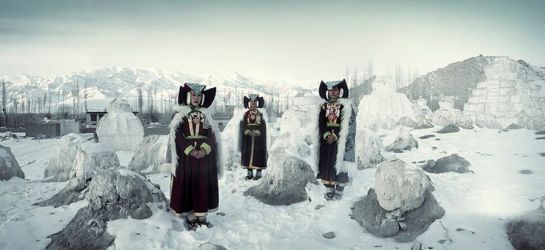
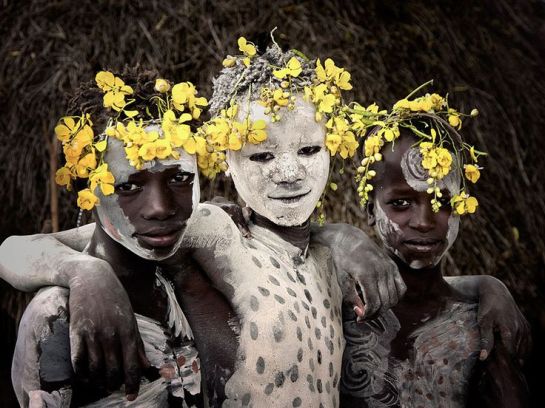
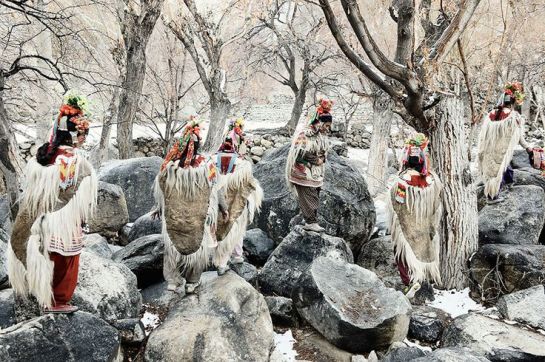
When I was young, our parents used to take us to see the Cleveland Ballet perform The Nutcracker most Christmas seasons. My favorite part bar none were the scenes in which Clara and The Prince traveled through exotic Arabian, Chinese and Russian lands on their way to meet the King and Queen. These scenes were my first glimpses into foreign lands and I was utterly mesmerized. When I saw the portraitsof some of the world’s most remote tribes taken by photographer Jimmy Nelsonposted online last week, I was reminded of the sense of awe I experienced so many years ago when other worlds were presented to me with such distant and magical beauty. Many more tribal portraits can be found here.
Photos from top to bottom: Ladakhi, India | Karo, Ethiopia | Drokpa, India | Vanuatu, Vanuatu Islands















 sisterdisco.com