Archive

Inspired & Inspiring

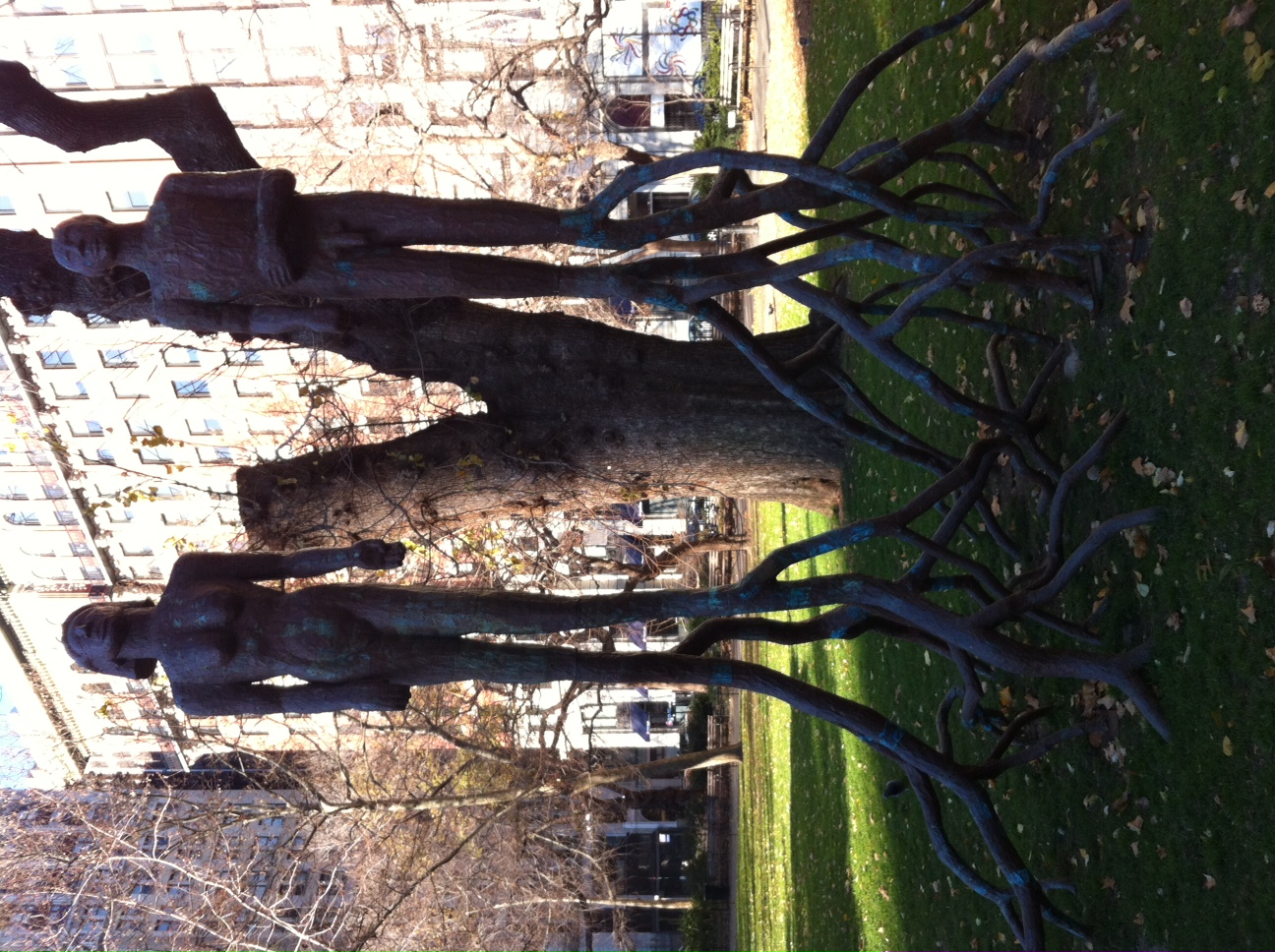
At this time of year, as we bring trees into our homes to gather round with friends and family, I am excited to (likely) be the first to wish you a Happy Roots Day!  Yep, apparently today, December 23rd, is uncommonly known as Roots Day.  A holiday whose origins are ironically unknown, Roots Day is a celebration of returning to family, learning more about your history and experiencing comfort through a sense of belonging.

Though we often think of our family genealogy in the form of a clean, simple and symmetrical “family tree”, this model clearly misses many significant connections and complexities that make each of us who we are today.  It is the nature of roots to both be tangled and to serve as a means of underlying support; there exists the possibility to uproot and to establish new roots at any time.  Roots are what ground and connect us to the earth, and thereby to one another.  So though it is unclear from where this whole Roots Day came, I’m looking forward to embracing the day with celebration.  I hope you do the same; Happy Roots Day to you and yours!

(Photo of Alison Saar‘s Treesouls taken at Madison Square Park)

A few years ago, I was bored. Really bored. It wasn’t momentary boredom but rather a fundamental, ongoing boredom. I started having conversations about the notion of boredom with friends and family. What did it mean to be bored? When is boredom experienced? Should it be met with acceptance or action? A lot of interesting things came out of these conversations but the one I found most useful was an intoduction to Mihaly Csikszentmihalyi’s notion of flow.

“Mihaly Csikszentmihalyi says creativity is a central source of meaning in our lives. A leading researcher in positive psychology, he has devoted his life to studying what makes people truly happy: ‘When we are involved in [creativity], we feel that we are living more fully than during the rest of life.’ He is the architect of the notion of “flow” — the creative moment when a person is completely involved in an activity for its own sake.”
(via Ted)

Brazil

Suddenly the need for and importance of flow became so clear to me.  And I started noticing the presence of the word “flow” in so many places; seemingly unrelated places, but then again connected in some way by the word itself.

It was there in my vinyasa flow yoga classes.

Level 7  positions

And again as a fundamental component of rap and hip hop’s rhythm and rhyme.

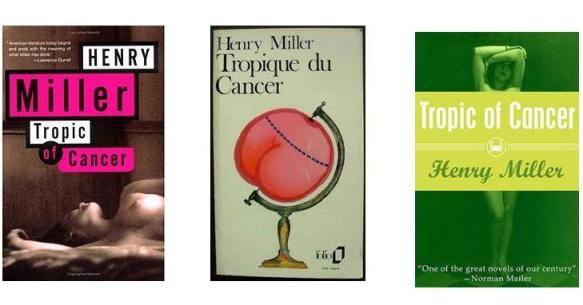
Most recently I came across it in Henry Miller’s Tropic of Cancer.  The utter beauty and cadence of Miller’s writing makes even his crassness appealing.  And I have to agree with him: I love everything that flows.


“I love everything that flows,” said the great blind Milton of our times. I was thinking of him this morning when I awoke with a great bloody shout of joy: I was thinking of rivers and trees and all that world of night which he is exploring. Yes, I said to myself, I too love everything that flows: rivers, sewers, lava, semen, blood, bile, words, sentences. I love the amniotic fluid when it spills out of the bag. I love the kidney with its painful gallstones, its gravel and what-not; I love the urine that pours out scalding and the clap that runs endlessly; I love the words of hysterics and the sentences that flow on like dysentery and mirror all the sick images of the soul; I love the great rivers like the Amazon and the Orinoco, where crazy men like Moravagine float on through the dream and legend in an open boat and drown in the blind mouths of the river. I love everything that flows, even the menstrual flow that carries away the seed unfecund. I love scripts that flow, be they hieratic, esoteric, perverse, polymorph, or unilateral. I love everything that flows, everything that has time in it and becoming, that brings us back to the beginning where there is never end: the violence of the prophets, the obscenity that is ecstasy, the wisdom of the fanatic, the priest with his rubber litany, the foul words of the whore, the spittle that floats away in the gutter, the milk of the breast and the bitter honey that pours from the womb, all that is fluid, melting, dissolute and dissolvent, all the pus and dirt that in flowing is purified, that loses its sense of origin, that makes the great circuit toward death and dissolution. The great incestuous wish is to flow on, one with time, to merge the great image of the beyond with the here and now. A fatuous, suicidal wish that is constipated by words and paralyzed by thought.”

-Henry Miller

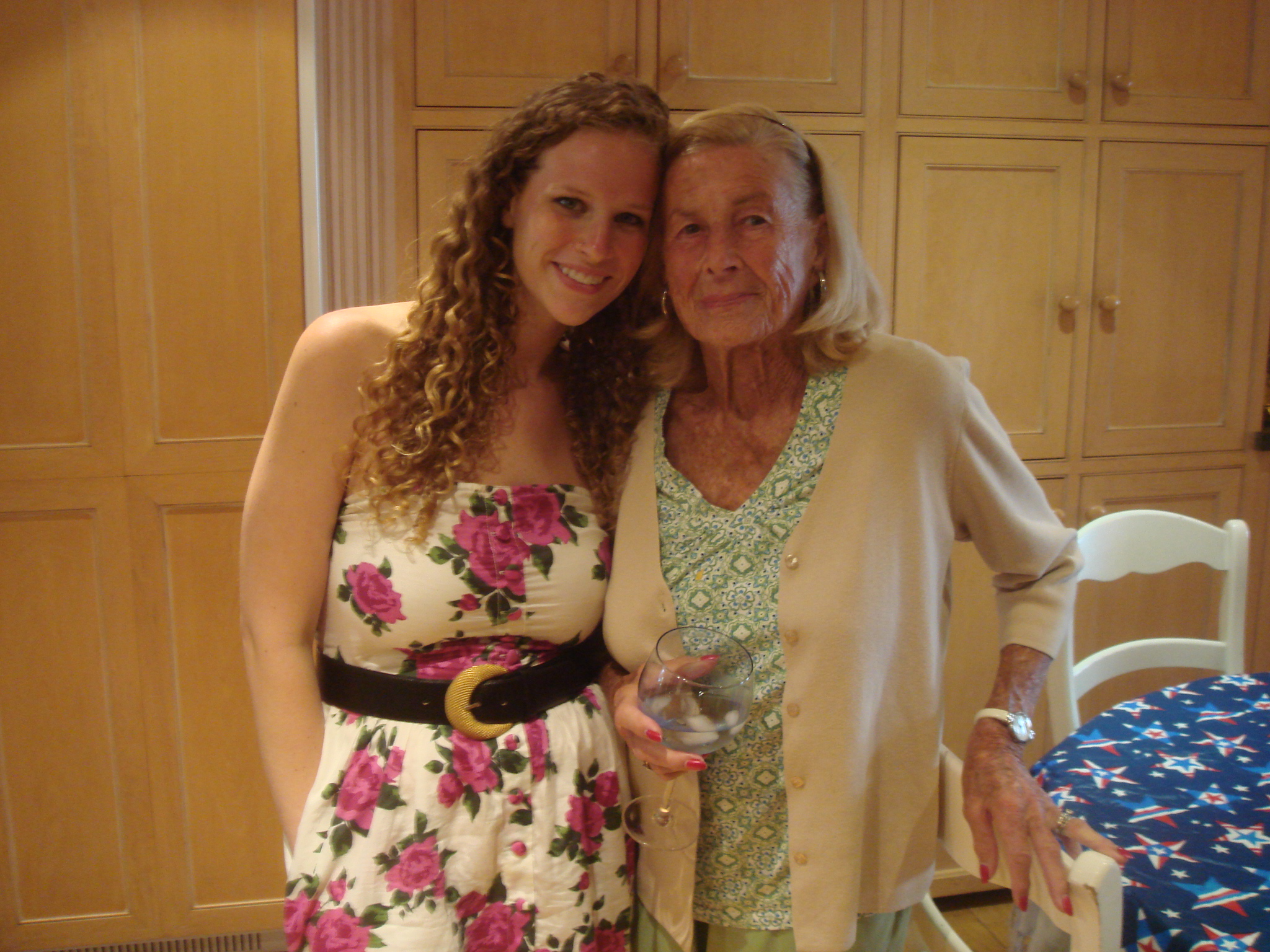
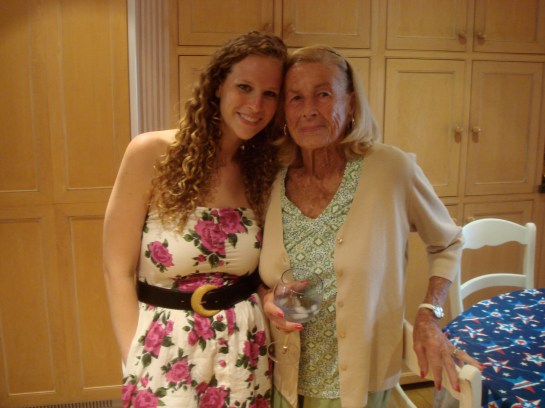
Our grandmother is 94 years old. She is the queen of getting herself out of tough conversations and giving responses that say everything and nothing at all.  These are her best responses that have become invaluable to us and have turned into life lessons and tips throughout the years.  We wanted to share them with you:

“Why not?”

It doesn’t matter if I am ordering an ice cream cone at 8 a.m. or trying on a ball gown just for the fun of it, her first response to me is most often, “why not?”.  On occasion, “why not” is replaced with “might as well”.  I could not count how many times this phrase has come to mind whenever I have nothing to say.

“Fouled up”

This is a lady’s way of using the F word.  When we want to be a lady but also want to say the F word then just say that the situation is  “fouled up”, just sayin.  This works to describe pretty much any messy situation: untangle-able jewelry, a broken kitchen disposal, or a complicated family dynamic.  All of these things can be categorized as “fouled up”.

“I thought so.”

This response comes in handy when, frankly, you don’t want to look like an ass. After every question you ask but feel like you should already know the answer, make sure to respond with, “I thought so”. You will forever seem like you knew what you were talking about.

“Tricky trick”

This is the favorite and most commonly replicated in our family. Usually after someone brings up a tough situtation and you aren’t sure what to say, “tricky trick” is always in your back pocket. The hard part is not using it too many times in one conversation. This is why there are many variations on the phrase. For example, when a situation is too “fouled up” to talk about any more, you can say, “On to the next trick!”. “On to the next trick” both ends the conversation and provides the wisdom that there will always be another “tricky trick” down the road, so don’t get too bogged down in the one right in front of you.  “Tricky trick” can also serve as a boiler plate for similarly worded phrases such as “funny fun”, “spooky spook”, “nifty nift”, “rainy rain” and so on.  You get the idea.

So those are just a few conversation tools that will help you along this holiday season filled with fouled up conversations!  Feel free to give ’em a try and let us know how they went over.

(photo found here)

At the beginning of October I went to a mediation at Occupy Wall St.  It was pretty intense and energizing.  Later that night, I was talking to Suz (my second mom basically) who was around my same age during the Vietnam protests.  She asked me if I was ready to hear her top tips for protesting. At the time, I thought they were pretty extreme, but as the movement progresses they seem just as relevant today as they were in the ’60s. I thought, given everything that’s going on now, I would share them with you.

Suz’s Top Ten Tips for Protesting

1.  No loose jewelry, no earrings, no necklaces, no bracelets

2.  Wear your hair up so as not to be pulled

3.  Do not wear a scarf

4.  Don’t wear open-toed shoes, rather shoes that you can run in

5.  Don’t take a purse

6.  Be aware of your surroundings

7.  Keep ID, your phone and money on you

8.  Carry a wet cloth in case of tear gas

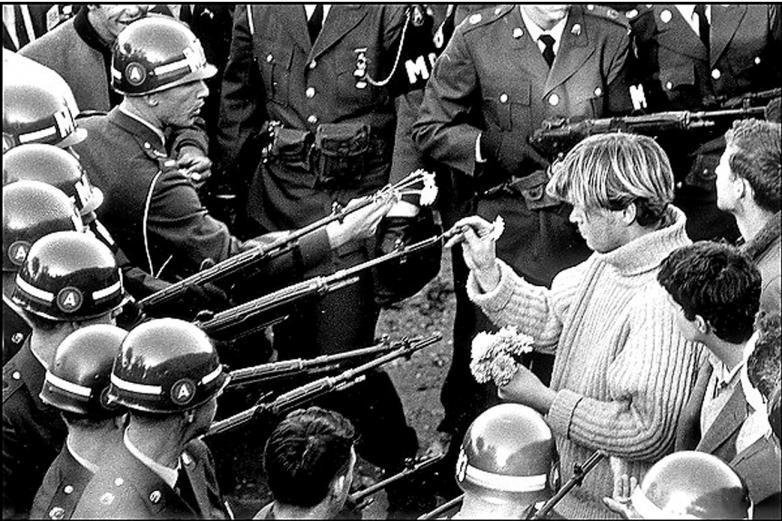
9.  Hold up a peace sign and stick a flower in his gun

10. Smile!


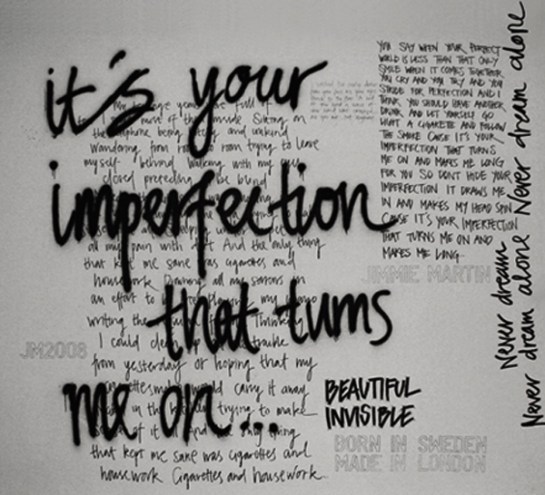
“When you have to choose between getting it done and getting it done perfect, get it done.  Don’t let the desire for perfection be an excuse for never finishing.

Do your very best with the time and resources you have.  Even if the results are not perfect, they will nonetheless bring great value.

By all means let perfection be your goal.  Just be sure not to let it become your excuse.

Be true to the highest standards you can envision, while at the same time being realistic about what you’re doing.  Your magnificent vision will be of no use to anyone unless it is expressed in some specific, tangible form.

Even if you can’t get it perfect, go ahead and get it done.  Achieving ninety-five percent of what you envision is much better than holding out for one hundred percent and never getting it done.

Though it won’t be perfect, and not everyone will like it, go ahead and deliver the value that you create.”

Ralph Marston

Top and Bottom images found here
Center image found here

I’ve watched this video several times and get more out of it with every viewing. It makes an almost a subtle point that I find very profound. Perhaps it is human nature to see others as separate from ourselves – whether it be those from different countries, ethnicities and religions or, closer to home, those from a certain neighborhood, floor in your building or branch of your family. It seems to me the more we recognize and challenge this behavior in ourselves, the more we evolve as a species.

“It’s the idea that people living close to nature tend to be noble. It’s seeing all those sunsets that does it. You can’t watch a sunset and then go off and set fire to your neighbor’s tepee. Living close to nature is wonderful for your mental health.”

Daniel Quinn, Ishmael